
History of the Gorkhaland Movement
The Gorkhaland movement is a long-standing campaign by the predominantly Nepali-speaking Indian Gorkha (or Gorkha) community in the Darjeeling hills, Kalimpong, and parts of the Dooars and Terai regions of West Bengal, India, to create a separate state called Gorkhaland. The demand stems from perceived cultural, linguistic, ethnic, and economic marginalization under Bengali-dominated West Bengal governance. Gorkhas emphasize their distinct identity, historical roots in British-era Gurkha regiments, and contributions to India’s military, while rejecting assimilation into Bengali culture. The proposed state would cover approximately 7,500 sq km, including Darjeeling, Kalimpong, Kurseong, and select plains areas.
Origins and Early Demands (Pre-Independence to 1980s)
The roots trace back to British colonial times:
- 1907: The Hillmen’s Association submitted the first formal memorandum demanding a separate administrative unit for Darjeeling, separate from Bengal.
- 1930s–1940s: Sporadic demands for autonomy or integration with other regions (e.g., Assam).
- Post-1947: Intermittent petitions, including in 1952 when the Akhil Bharatiya Gorkha League demanded separation from Bengal.
The modern phase began in the 1980s amid growing ethnic tensions, economic neglect (despite tea and tourism revenue), and fears of cultural erosion.
First Major Phase: 1986–1988 (Violent Agitation under GNLF)
- 1980: Subhash Ghisingh founded the Gorkha National Liberation Front (GNLF) and popularized the term “Gorkhaland.”
- 1986: The movement turned violent with armed insurgency, bandhs (shutdowns), clashes, and demands for statehood.
- This was the bloodiest phase in post-independence Darjeeling history: Over 1,200 deaths (official estimates), widespread anarchy, police firings, and economic blockade.
- 1988: Tripartite agreement led to the creation of the Darjeeling Gorkha Hill Council (DGHC), a semi-autonomous body under Ghisingh. Many viewed this as a compromise, diluting full statehood demands.
Revival: 2007–2011
- 2005–2007: Ghisingh’s support for Sixth Schedule status (tribal autonomy) was seen as betrayal, leading to his ouster.
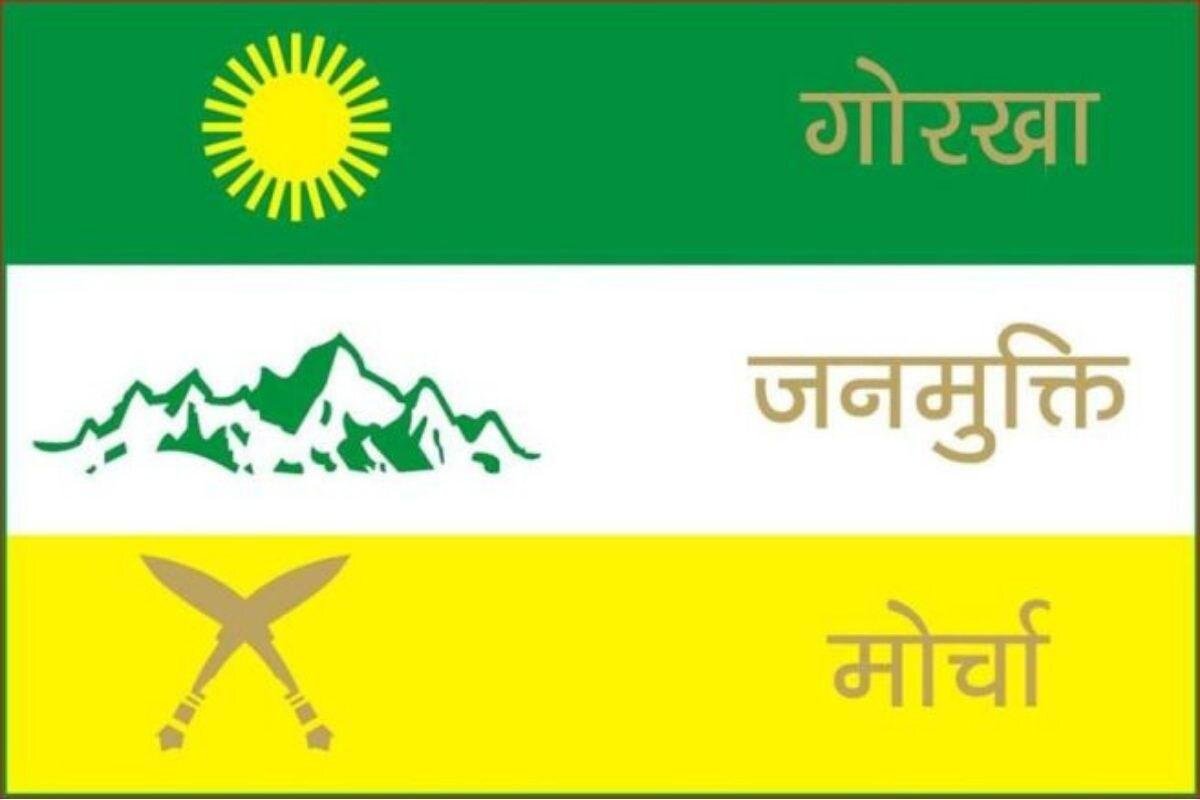
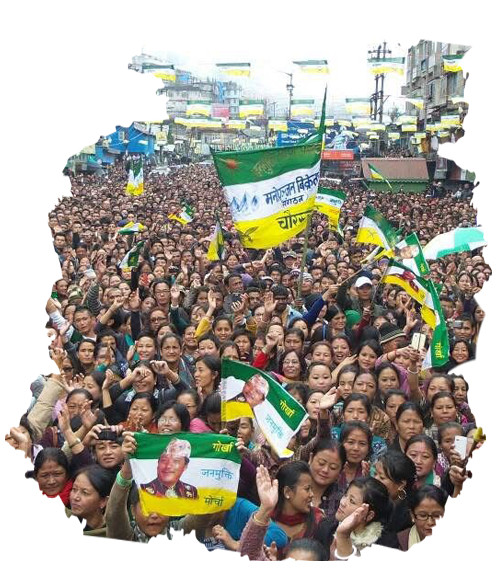
- 2007: Bimal Gurung broke away to form the Gorkha Janmukti Morcha (GJM), reviving non-violent but intense agitation (bandhs, rallies, cultural assertions).
- Mass support surged, ousting GNLF dominance.
- 2011: Tripartite agreement created the Gorkhaland Territorial Administration (GTA), replacing DGHC with broader powers. Gurung became its chief, temporarily calming tensions.
Renewed Agitations: 2013 and 2017
- 2013: Inspired by Telangana’s creation, GJM renewed demands; Gurung resigned from GTA.
- 2017: Triggered by West Bengal’s perceived imposition of Bengali language in schools (later clarified as optional). Led to a 104-day indefinite bandh.
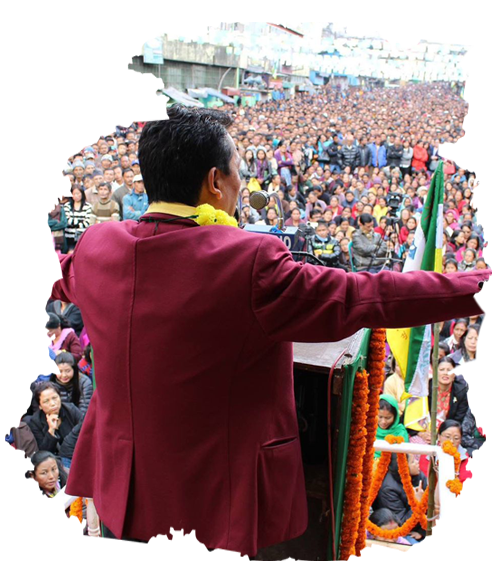
GJM was founded on October 7, 2007, by Bimal Gurung, a former councillor of the Darjeeling Gorkha Hill Council (DGHC) under the Gorkha National Liberation Front (GNLF).
GJM was founded on October 7, 2007, by Bimal Gurung, a former councillor of the Darjeeling Gorkha Hill Council (DGHC) under the Gorkha National Liberation Front (GNLF).